
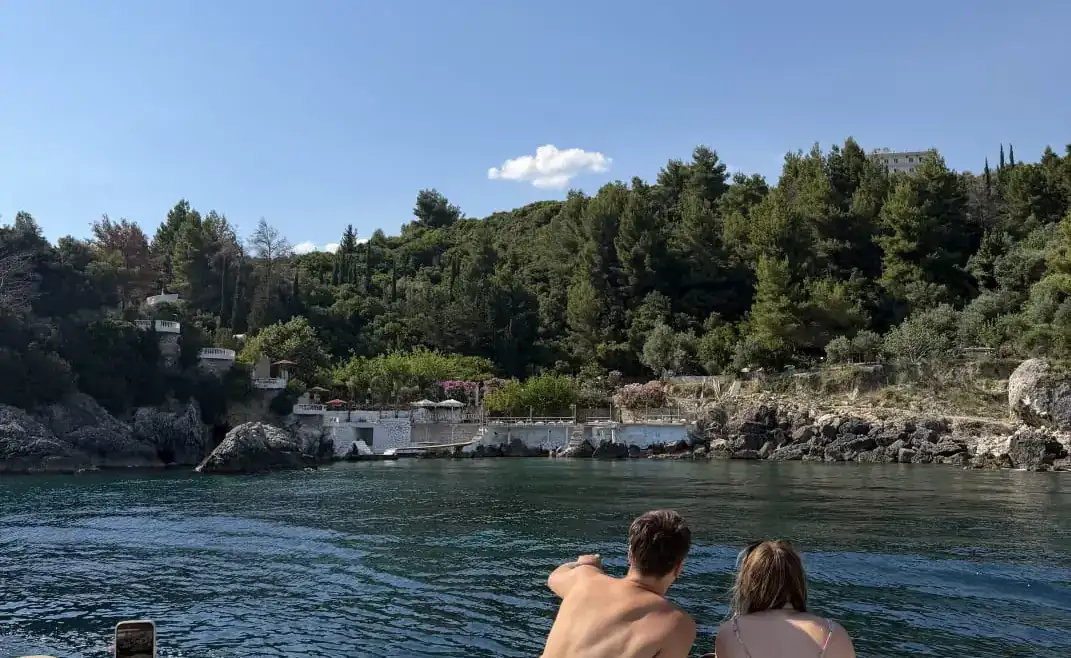
Booking your first boat tour in Himara is exciting, but it can also leave you with several practical questions.
Where do you meet the boat? How early should you arrive? Will every destination involve swimming? Can the itinerary change? What happens with your belongings while you are in the water?
The experience is usually straightforward once you understand how the day works. You meet the crew, receive the necessary instructions, board the boat and leave Himara behind as the coastline gradually opens around you.
This guide takes you through the entire experience—from choosing your tour to returning to the harbor.
Choose the Experience Before Choosing the Destination
It is tempting to select a tour based only on the most impressive photograph. Grama Bay, Krorez Beach and Pirate Cave all look spectacular, but they create very different days at sea.
Before choosing a destination, think about the kind of experience you want.
Ask yourself:
- How many hours do I want to spend on the water?
- Do I want a social or private experience?
- Is swimming one of my main priorities?
- Do I prefer caves, beaches or sunset views?
- Have I traveled on a speedboat before?
- Am I comfortable with a longer journey?
A short coastal trip can be a good introduction for first-time passengers. Longer routes are more suitable when reaching a remote beach is one of the main reasons for your visit.
Our guide to Himara boat tour duration explains the difference between shorter coastal experiences and longer journeys toward Grama Bay or Krorez.
Group or Private: Which Is Better for a First Trip?
Both options allow you to discover the Himara coastline, but the atmosphere is different.
A group boat tour in Himara follows a planned departure time, route and schedule. You share the experience with other travelers, making it a practical and more affordable option for solo visitors, couples and small groups.
Group tours work well when:
- You are comfortable following a fixed schedule.
- You want to meet other travelers.
- You do not need to personalize the itinerary.
- You prefer to pay per person.
- You are happy sharing the swimming and beach stops.
A private boat tour from Himara gives your party the boat to itself. This makes it easier to discuss the pace, preferred stops and the amount of time spent swimming.
Private tours can be particularly helpful for families, larger groups, couples seeking privacy or passengers who want a calmer introduction to traveling by boat.
However, private does not mean that every request can always be followed. Weather, distance and safety still determine where the boat can go.
Confirm the Details Before the Day of Your Tour
Do not rely only on the title or main photograph of the tour. Before departure, confirm the practical details with the operator.
You should know:
- The meeting point
- The required arrival time
- The expected departure and return times
- The main destination
- The approximate tour duration
- What is included
- What you should bring
- Whether stops involve swimming or beach access
- How weather-related updates will be communicated
This is also the right moment to mention any concerns about swimming, mobility, children or motion sickness. It is easier for the crew to advise you when they know your needs before the boat leaves.
Arrive Before the Departure Time
The departure time is normally the time when the boat should leave—not the time when passengers should begin looking for the meeting point.
Arriving early gives you time to find the boat, speak with the crew and organize your belongings without delaying the group.
Keep your booking information and phone accessible. Avoid placing everything at the bottom of a large beach bag, especially if you need to show a reservation or contact the operator.
If you are walking from your accommodation, allow additional time during the busiest summer weeks. The waterfront can become crowded, and parking near the center may take longer than expected.
What Happens Before Boarding?
Before you step onto the boat, the crew may confirm your reservation, the number of passengers and the selected route.
This is a good opportunity to ask any final questions.
Tell the crew if:
- You cannot swim.
- You are nervous around deep water.
- You have never traveled on a speedboat.
- You are sensitive to motion.
- You are traveling with a young child.
- You need assistance while boarding.
- You have a condition the crew should know about.
When boarding, wait for instructions rather than stepping onto the boat immediately. Boats move slightly even in calm water, and the safest place to step or hold may not be obvious from the dock.
Listen to the Safety Instructions
The safety explanation may feel brief, but it is an important part of your first boat tour in Himara.
Pay attention to:
- Where you should sit while the boat is moving
- Which handrails you can use
- Where life jackets are stored
- When life jackets must be worn
- Where personal bags should be placed
- How to enter and leave the water
- How the crew will signal that it is time to return
- Which areas of the boat passengers should avoid
Do not move around while the boat is traveling unless the crew tells you it is safe. Keep bags, towels and footwear away from the main walkway.
The skipper’s instructions always take priority over what another passenger suggests.
What Does the Boat Ride Feel Like?
The first few minutes usually take you away from Himara’s waterfront and into more open views of the coast.
On calm water, the ride may feel smooth and relaxed. When small waves are present, you will notice more movement, particularly as the boat crosses exposed sections of the route.
Sit where the skipper recommends and keep your body relaxed. Holding yourself rigidly can make every movement feel stronger.
If you begin to feel uncomfortable, tell the crew early. Waiting silently until you feel seriously unwell makes the situation harder to manage.
Travelers who know they are sensitive to movement should discuss suitable precautions with a doctor or pharmacist before the trip. A light meal and enough water are generally more comfortable than boarding after a heavy meal or excessive alcohol.
Not Every Place on the Route Is a Full Stop
Tour itineraries often contain a long list of beaches, caves and coastal landmarks. That does not necessarily mean the boat will stop for an extended period at every location.
During one tour, you may:
- Pass a beach while the skipper identifies it.
- Slow down near a cliff or cave for photographs.
- Approach a cave without entering it.
- Stop briefly for swimming.
- Spend longer at the main beach.
- View certain places only during the return journey.
The main destination usually receives more time than the smaller locations encountered along the route.
Sea conditions also influence how closely a boat can approach rocks and cave entrances. A cave may be visible but unsuitable to enter when waves are moving toward the cliffs.
How Do Swimming Stops Work?
When the boat reaches a suitable swimming location, wait until the crew confirms that you may enter the water.
Before jumping or climbing in:
- Check where other passengers are swimming.
- Ask which side of the boat should be used.
- Make sure the engine is not operating near the swimming area.
- Confirm how you will return to the boat.
- Keep a safe distance from rocks and caves.
- Follow the announced return time.
Do not swim farther away simply because the water looks calm. Distances at sea can be deceptive, and conditions near rocks may differ from those beside the boat.
Swimming is not automatically required on every tour. If you prefer to remain aboard, discuss this with the operator before booking and remind the crew on the day.
Our guide to taking a boat tour for non-swimmers in Himara explains what should be confirmed in advance.
What Happens at a Beach Stop?
Beach access depends on the destination, boat and water depth.
At some locations, passengers may step directly onto the shore. At others, the boat may stop in shallow water, requiring passengers to walk or swim a short distance. Pebbles and underwater rocks can make water shoes useful.
Before leaving the boat, ask:
- How long the stop will last
- Where the boat will remain
- Whether you need to take your belongings
- How the crew will call everyone back
- Whether the beach has facilities
- Whether food or drinks are available
Remote beaches may not have toilets, changing rooms, shops or reliable mobile reception. Take what you need, but avoid carrying unnecessary valuables onto the beach.
Keep Your Belongings Simple
Space aboard a boat is more limited than it is on a beach or inside a car.
A compact bag is normally enough for:
- Sunscreen
- Sunglasses
- A secure hat
- Drinking water
- A small towel
- A dry T-shirt
- Water shoes or sandals
- A waterproof phone pouch
- Personal medication
- A small amount of cash or a payment card
Wear your swimsuit before arriving. Changing on a small boat or remote beach may be difficult.
For a complete checklist, read our Himara boat tour packing guide.
Why the Route Can Change
A published itinerary describes the planned experience, but the sea always has the final word.
The waterfront may appear calm while conditions near an exposed cape or cave are less comfortable. Wind direction, waves, visibility and boat traffic can all influence the route.
Depending on the conditions, the skipper may:
- Change the order of the stops
- Spend less time near an exposed cave
- Choose a more protected swimming bay
- Adjust the departure time
- Shorten a particular stop
- Avoid a destination that is not safe to approach
These decisions are not a sign that the tour has been poorly organized. They are part of operating responsibly at sea.
Our article about Himara boat tour weather explains why sunshine alone does not guarantee calm conditions along the entire route.
The Return Journey Is Part of the Experience
After the main stop, the return to Himara is not simply empty travel time.
The light may have changed, familiar beaches appear from a different direction and the coast gradually becomes more recognizable as the boat approaches town.
Keep a dry T-shirt available, especially after a long swimming stop. Even on a warm day, the movement of the boat can create a cooler breeze.
Do not stand up or begin collecting your belongings until the crew confirms that it is safe. Wait until the boat is secured before stepping onto the dock.
Check the seating area for your phone, sunglasses, towel and footwear before leaving.
Make Your First Boat Tour in Himara the Right One
Your first boat tour in Himara does not need to be the longest or the most expensive option.
It needs to match your available time, comfort at sea and the places you genuinely want to experience.
Choose between a group and private tour, confirm the itinerary, arrive early and explain any concerns before boarding. Once the boat leaves the harbor, follow the crew’s instructions and allow the coastline to become the main part of the day.
Explore the available boat tours in Himara or contact Himara Sea Escapes to find the experience that best matches your plans.