
The Himara Riviera is often celebrated for its turquoise waters, dramatic cliffs, and secluded beaches. Yet beyond the postcard-perfect scenery lies another side of the coastline—one shaped by centuries of trade, migration, resistance, and cultural exchange.
Visitors who explore the region by sea often discover that every bay, peninsula, and hillside village carries a story. The historical sites on the Himara coast reveal a rich heritage that stretches from ancient civilizations to Ottoman influences and modern Albanian identity.
For travelers joining boat excursions with Himara Sea Escapes, these stories add a deeper layer to the experience, transforming a simple coastal adventure into a journey through time.
A Coast That Connected Civilizations
Long before tourism arrived, the Himara coastline served as an important maritime route across the Ionian Sea.
Ships traveling between southern Italy, Greece, and the Balkans frequently passed these shores. Small natural harbors offered shelter from storms, while elevated hills provided strategic viewpoints for monitoring maritime traffic.
Because of its location, Himara became a crossroads where different cultures, languages, and traditions interacted over generations.
Today, traces of this multicultural past remain visible in architecture, local customs, and historic settlements scattered along the coastline.
The Castle of Himara: Guardian Above the Sea
One of the most significant historical landmarks in the region is Himara Castle.
Perched high above the modern town, the fortress overlooks the Ionian Sea and surrounding mountains. Its elevated position allowed inhabitants to monitor approaching ships and defend the coastline during periods of conflict.
Unlike many abandoned fortifications, Himara Castle remains integrated into daily life. Within its stone walls, visitors can still find traditional homes, narrow pathways, churches, and viewpoints overlooking the sea.
Exploring the castle offers a unique perspective on how coastal communities lived, traded, and protected themselves throughout history.
Visitors interested in combining cultural exploration with coastal scenery often enjoy reading about other local experiences in the Himara Sea Escapes guide to The Most Photogenic Places Along the Himara Coast.
Porto Palermo: A Fortress Between History and Legend
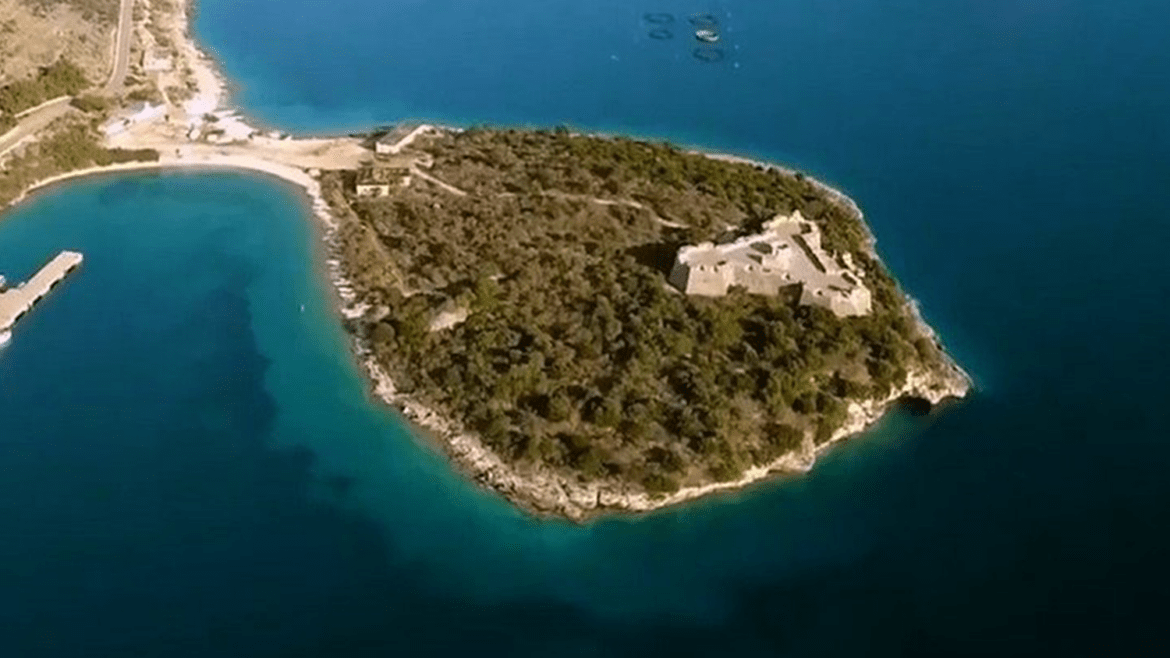
Few places along the Albanian Riviera capture the imagination quite like Porto Palermo.Situated on a small peninsula surrounded by crystal-clear waters, the fortress is commonly associated with Ali Pasha of Tepelena, one of the most influential figures in Balkan history.
The strategic position of Porto Palermo allowed control over maritime movements while offering protection from attacks. Whether viewed from the sea or explored on foot, the castle remains one of the most iconic historical sites on the Himara coast.
Many boat tours pass by Porto Palermo, allowing visitors to appreciate how geography and history merged to create one of Albania’s most remarkable coastal fortifications.
Ancient Villages Above the Coast
While beaches attract most visitors, some of the region’s most fascinating stories are found in the hillside villages overlooking the sea.
Places such as Vuno, Qeparo, and the old sections of Himara preserve traditional stone architecture and narrow pathways that have remained largely unchanged for generations.
These settlements were often built at higher elevations to provide security from pirate raids and coastal attacks. From these locations, residents could observe the sea while remaining protected from unexpected invasions.
Walking through these villages reveals a slower rhythm of life and a connection to traditions that continue to shape local culture today.
The Sea as a Source of Survival
Throughout history, the sea provided much more than transportation.
Fishing, trade, and maritime commerce formed the economic backbone of many coastal communities. Families depended on the Ionian Sea not only for food but also for connections with neighboring regions across the Mediterranean.
Many local legends still tell stories of sailors, merchants, storms, and hidden coves used as temporary shelters during difficult voyages.
Modern visitors can experience some of these same coastal perspectives during a Himara boat trip, where many of the landscapes visible today appear remarkably similar to those seen by generations of seafarers centuries ago.
Hidden Chapels and Religious Heritage
Scattered throughout the region are small churches and chapels that reflect the area’s spiritual history.
Some stand within castle walls, while others overlook remote sections of the coastline. These religious sites offer insight into the cultural resilience of local communities through periods of political change and foreign influence.
Many remain active places of worship, serving as living connections between past and present.
Their modest appearance often contrasts with their historical significance, making them some of the most overlooked cultural treasures of the Albanian Riviera.
Discovering History from the Water
One of the most unique ways to appreciate the historical sites on the Himara coast is from the sea itself. Viewing castles, cliffs, villages, and ancient lookout points from the water helps visitors understand why these locations were chosen centuries ago.
The coastline reveals natural defenses, protected bays, and strategic positions that shaped local history long before roads connected the region.
This perspective transforms a sightseeing excursion into a deeper understanding of the relationship between geography and human settlement.
For travelers planning a day on the water, the Himara Sea Escapes article about Exploring Himara Boat Trips offers additional inspiration for discovering the coastline from a different angle.
The Himara Riviera is more than a collection of beautiful beaches. Behind every bay and village lies a story of resilience, trade, culture, and connection to the sea.
The historical sites on the Himara coast reveal a region where nature and history exist side by side. From ancient fortresses and traditional villages to maritime legends and hidden chapels, the coastline offers experiences that go far beyond typical beach tourism.
For travelers willing to look beyond the shoreline, Himara becomes not just a destination—but a living history shaped by centuries of life along the Ionian Sea.