
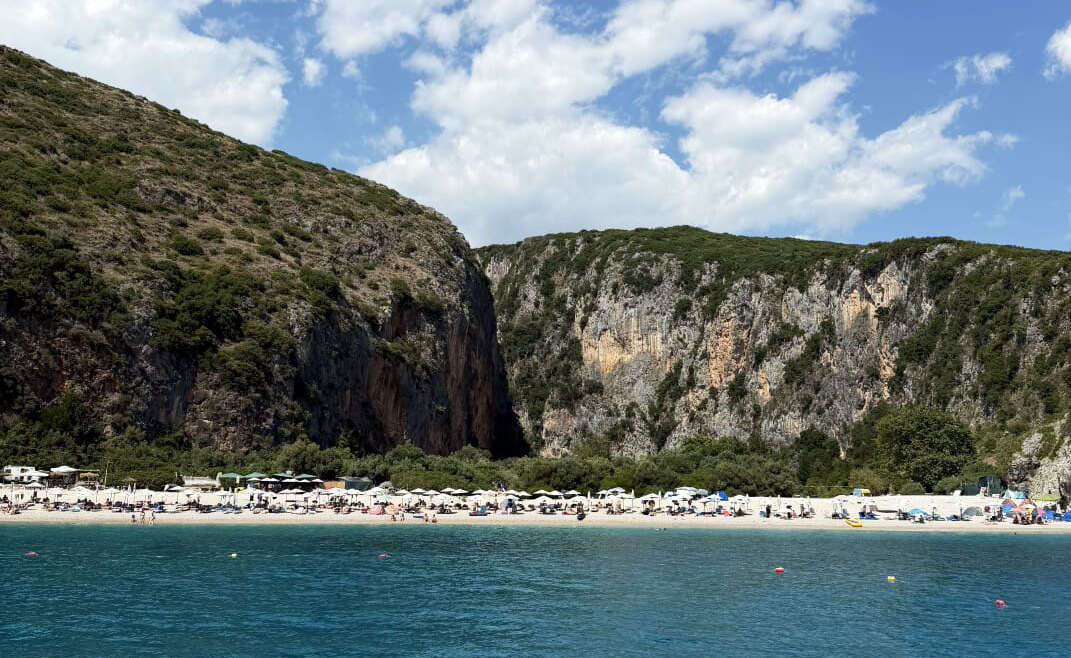
Checking the weather before a day at sea sounds simple. You open an app, look for a sun symbol and assume the boat trip is confirmed. Along the coast, however, sunshine is only one part of the picture.
Himara boat tour weather depends just as much on wind, waves and conditions farther along the route. The waterfront may look completely calm while a distant cape, exposed cave or open section of coastline feels very different.
This does not mean travelers should worry about every breeze shown on a forecast. It means the final decision should be based on the actual sea, the planned destination and the skipper’s local assessment. Most summer days are suitable for exploring the coast, but a good tour is never forced simply because the sky is blue.
Here is what to expect when the weather changes, how conditions can affect your itinerary and what you can do to plan a more comfortable day on the Ionian Sea.
What Really Matters in Himara Boat Tour Weather?
Air temperature is often the first detail holidaymakers notice, but it is rarely the most important one for a boat trip. Three other factors deserve more attention.
Wind
Wind can change the surface of the sea quickly. Its direction also matters. A breeze that feels light in town may create choppier water on an exposed part of a longer route.
The same wind does not affect every destination in the same way. One bay may remain protected by cliffs while another receives waves directly. This is why local knowledge matters more than reading a single number on a weather app.
Waves and swell
Small surface waves are normal and do not automatically make a trip unsafe or unpleasant. What matters is how they interact with the boat, the coastline and the places included in the itinerary.
Narrow cave entrances and rocky edges require more caution than open swimming areas. If waves are moving toward the rocks, a skipper may decide to admire a cave from a safer distance or replace that stop with a protected bay.
Visibility and sudden changes
Clear visibility helps the crew read the coast and other boat traffic. Dark clouds, a sudden drop in visibility or a developing storm require a different response from an ordinary summer breeze.
Conditions are monitored before departure and throughout the experience. Weather is not a single decision made in the harbor; it remains part of the skipper’s judgment for the entire trip.
Can a Sunny Day Still Be Too Rough for a Boat Tour?
Yes. Blue skies over Himara do not guarantee calm water everywhere along the coast.
This is one of the most confusing parts of Himara boat tour weather for first-time visitors. From a hotel balcony or the promenade, the day may look perfect. Farther north or south, wind may be meeting an exposed headland and creating a more uncomfortable passage.
The opposite can also happen. A few clouds do not automatically mean the sea is unsuitable. A cloudy morning with light wind may provide a smoother ride than a hot, bright afternoon with stronger coastal breezes.
For this reason, do not judge the trip only by the icon on your phone. The route, wind direction and real conditions at sea tell a more complete story.
Is the Sea Always Calmer in the Morning?
Morning departures often offer smoother conditions, cooler air and a quieter start to the day. They are a popular choice for families, first-time passengers and anyone concerned about motion sickness.
But “often” is not the same as “always.” A morning can be windy, and an evening can be beautifully calm. Local conditions can change from one day to another, so a departure time should never be treated as a guarantee.
If the atmosphere of the trip matters as much as the sea conditions, our guide to the best time for a boat tour in Himara compares daytime exploration with the softer light and relaxed mood of a sunset experience.
What Happens If the Weather Changes Before Departure?
A weather-related change does not always mean a complete cancellation. Depending on the conditions and the selected tour, several outcomes are possible.
The departure may continue as planned
Forecasts can look uncertain even when the local sea remains suitable. If the route is safe and comfortable, the tour may leave at the scheduled time.
The departure time may be adjusted
When conditions are expected to improve, moving the trip to another part of the day may be the most practical solution. This depends on availability, the route and the other bookings scheduled for that boat.
The itinerary may change
A sheltered coastal route can sometimes remain suitable when a distant or more exposed destination is not. A change of route may preserve the experience while avoiding the most difficult section of the sea.
The tour may be rescheduled or cancelled
If conditions are not suitable for a safe trip, departure should not be forced. The team will communicate the available options according to the circumstances and the booking involved.
When reserving, ask how weather-related updates will reach you and make sure the phone number provided with your booking is active during your stay.
Why Different Routes React Differently to the Same Weather
Not all boat tour destinations around Himara have the same exposure.
A shorter tour visiting nearby beaches and caves remains closer to town. A longer journey to Grama Bay or Krorez covers more distance and passes several sections of coastline. Conditions can therefore vary during the same trip.
For example, the Pirate Cave group tour focuses on places relatively close to Himara, while the Grama Bay tour travels much farther along the Riviera. The Coastline Tour sits between those experiences in both distance and duration.
This is why one route may operate while another is adjusted. It is not inconsistency. It reflects the distance, orientation of the coast and conditions expected at the main destination.
If you are still deciding how much time you want to spend at sea, read our comparison of Himara boat tour duration.
Can Caves and Swimming Stops Change During the Tour?
Yes. A published itinerary describes the planned experience, but the sea decides how each stop can be approached on the day.
Caves are a good example. Entering a cave requires suitable water movement, enough space and safe clearance from the rocks. If that is not possible, the skipper may slow down outside so passengers can still see it without taking an unnecessary risk.
Swimming stops can also move. The original bay may have waves, boat traffic or less comfortable conditions, while another nearby location is protected and clear. Choosing the better stop can give passengers more enjoyable swimming, even if the order of the itinerary changes.
The purpose of an adjustment is not to reduce the experience. It is to respond to the coast as it actually is, rather than following a list without judgment.
What If You Are Worried About Seasickness?
You do not need to wait for rough weather to feel motion at sea. Some people are sensitive even in mild conditions, especially on their first speedboat trip.
A few practical choices can help:
- Choose a morning departure when possible.
- Eat a light meal instead of boarding with an empty or very full stomach.
- Drink water before and during the trip.
- Sit where the crew recommends and face the direction of travel.
- Look toward the horizon rather than down at your phone.
- Tell the crew early if you begin to feel uncomfortable.
- Consider a shorter route if you are unsure how your body will react.
The group boat tours from Himara include shorter and longer options, so you do not have to begin with a five-hour journey. A compact trip can still show you beaches, cliffs and sea caves without turning the tour into the main event of your entire day.
What Should You Bring When the Forecast May Change?
Even on a hot day, movement across the water can feel cooler than standing in town. You do not need a large bag, but a few well-chosen items make changing conditions easier to handle.
Bring:
- A light shirt or thin wind-resistant layer
- A towel and dry clothing for after swimming
- Sunscreen, even when the sky looks cloudy
- Sunglasses with a secure fit
- A waterproof pouch for your phone and documents
- Drinking water
- Shoes or sandals that are easy to manage on the boat
Avoid leaving loose hats, paper bags or lightweight items where the wind can catch them. Keep valuables together and follow the crew’s advice about where to store your belongings.
For a more complete checklist, use our Himara boat tour packing list before you leave your accommodation.
Should You Wait for a Perfect Forecast Before Booking?
Usually, no. Long-range forecasts change, and waiting until every weather symbol looks perfect can leave you with fewer tour choices during July and August.
A better approach is to book the experience you want, keep some flexibility in your holiday schedule and stay reachable before departure. If your visit lasts several days, avoid placing the boat tour on your final morning. An earlier booking leaves more room if the sea requires a change.
Our guide on when to book a boat tour in Himara explains how availability changes through the summer and why popular routes often fill before the date arrives.
How to Check the Forecast Without Overthinking It
Weather apps are useful for planning, but they should help you ask better questions rather than make the final decision for you.
Before the trip, look at:
- The forecast for the correct date and departure time
- Wind, not only temperature and sunshine
- Whether conditions are expected to improve or worsen
- Messages or calls from the tour team
- The advice given at the meeting point
Avoid comparing five apps until one gives you the answer you prefer. Forecast models can disagree, particularly several days in advance. The most useful update is the one that combines a recent marine forecast with local observation and knowledge of the exact route.
Let the Conditions Shape a Better Day at Sea
The best boat trips are not the ones that ignore the weather. They are the ones that understand it.
Good Himara boat tour weather is more than a warm temperature and a clear sky. It is a combination of manageable wind, suitable waves, clear visibility and a route that fits the conditions of the day.
Small changes to the timing, swimming stop or cave approach are normal parts of exploring a natural coastline. They allow the crew to protect passengers while still showing them the places that make Himara unforgettable.
Explore the available private and group boat tours with Himara Sea Escapes and contact the team to confirm the route, availability and latest sea conditions for your chosen date.